Thursday, 17 September 2020

Earlswood all-dayer - Autumn 2020

This year's Earlswood autumn all-day birdwatch took place on Saturday 5th September, and it was a day to remember with a total of 71 bird species found by the team - our highest ever autumn total on patch! Previous autumn species totals have been 63 in 2019, 69 in 2018, 63 in 2017, 57 in 2016 and 56 in 2015. It was also our second highest all-dayer total ever, the spring 2016 all-dayer total of 77 species remaining Team Earlswood's best.

Everyone enjoyed it and I thoroughly did, I think particularly as we weren't able to do an all-dayer in the spring this year due to the COVID-19 restrictions. I put in about 9.5 hours of effort and some of the other team members put in several hours each too, this along with the slightly higher than usual number of participants contributed to our excellent result. Water levels at the lakes were falling but weren't particularly low on the day, with only small amounts of shoreline, and despite the pleasant weather there was still small amounts of bird movement evident.

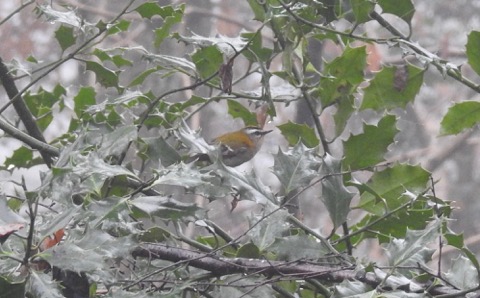
Personal highlights for me included finding a female Redstart along Springbrook Lane, the first Meadow Pipits (5) of the autumn over Manor Farm and a Green Sandpiper flying over the lakes. I also saw a Teal on Engine Pool and a late Common Whitethroat in Spring Brook Scrubland. A Spotted Flycatcher at Springbrook Lane found by John Oates, a Peregrine over Windmill Pool seen by Joe Owen, and a couple of sightings of Yellow Wagtail (firstly by Ashley Grove) were amongst the other birds of note seen over the course of the day. Ashley also had a possible Arctic/Yellow-browed Warbler along Gypsy Lane but didn't get enough on it and it wasn't seen again unfortunately! Our most surprising omissions were Mistle Thrush and Kingfisher. Nevertheless, a great effort by the team!

Many thanks to Jon Chidwick, Ashley Grove, Yvonne Heward, Harry Hopkins, Janet James, Mike Jeeves, Peter Morgan, John Oates, Joe Owen, Tony and Barbara Philp, and John Sirrett for their participation in the field, and extra thanks to John Sirrett for collating the species recorded during the day. The full list was as follows:

  1. Black-headed Gull
  2. Blackbird
  3. Blackcap
  4. Blue Tit
  5. Bullfinch
  6. Buzzard
  7. Canada Goose
  8. Carrion Crow
  9. Chaffinch
  10. Chiffchaff
  11. Coal Tit
  12. Collared Dove
  13. Common Tern
  14. Coot
  15. Cormorant
  16. Dunnock
  17. Feral Pigeon
  18. Goldcrest
  19. Goldfinch
  20. Great Crested Grebe
  21. Great Spotted Woodpecker
  22. Great Tit
  23. Green Sandpiper
  24. Green Woodpecker
  25. Greenfinch
  26. Grey Heron
  27. Grey Wagtail
  28. Greylag Goose
  29. Herring Gull
  30. Hobby
  31. House Martin
  32. House Sparrow
  33. Jackdaw
  34. Jay
  35. Kestrel
  36. Lesser Black-backed Gull
  37. Linnet
  38. Long-tailed Tit
  39. Magpie
  40. Mallard
  41. Marsh Tit
  42. Meadow Pipit
  43. Moorhen
  44. Mute Swan
  45. Nuthatch
  46. Peregrine
  47. Pheasant
  48. Pied Wagtail
  49. Raven
  50. Redstart
  51. Reed Bunting
  52. Robin
  53. Rook
  54. Sand Martin
  55. Siskin
  56. Song Thrush
  57. Sparrowhawk
  58. Spotted Flycatcher
  59. Starling
  60. Stock Dove
  61. Swallow
  62. Swift
  63. Tawny Owl
  64. Teal
  65. Treecreeper
  66. Tufted Duck
  67. Whitethroat
  68. Willow Warbler
  69. Woodpigeon
  70. Wren
  71. Yellow Wagtail

Within the West Midlands as a whole, a record-breaking 32 sites participated in the all-dayer on the same day, producing another record of 140 bird species observed. Earlswood fared quite well, finishing on a higher or equal total compared with other patches that normally score higher than us, and probably coming as close to Upton Warren's total as we ever will! :D

Well done to all who took part, and thanks to Phil Andrews who has once again collated the following results:

104 - Belvide
  96 - Branston GPs
  94 - Ladywalk
  90 - Grimley
  90 - Middleton Lakes
  89 - Venus Pool
  85 - Chelmarsh
  85 - Sandwell Valley
  82 - Bittell
  82 - Chasewater
  79 - Salford Priors GPs
  76 - Alvecote Pools
  73 - Upton Warren
  71 - Dairy Farm
  71 - Earlswood
  71 - Marsh Lane
  70 - Coney Meadows
  70 - Whitemoor Haye
  69 - Doxey Marshes
  68 - Sutton Park
  63 - Draycote
  63 - Morton Bagot
  63 - Stoke patches
  60 - South Coventry
  58 - Highgate Common etc
  54 - Avon Meadows
  54 - Blithfield
  53 - Edgbaston Reservoir
  51 - Sheepwash
  49 - Plantsbrook etc
  46 - Little Aston SWT
  46 - Halesowen (2)
  42 - Halesowen (1)

Further details for each patch have been posted by Phil here.

Fingers very much crossed that the spring all-dayer next year will be able to go ahead...

Matt

Tuesday, 24 March 2020

Advice on Earlswood birding during the COVID-19 lock-down

Posted 24/03/2020
Updated 26/03/2020
Updated 18/04/2020

New guidance issued by the National Police Chiefs' Council has been posted on the facebook page of Alcester Police, regarding travel for exercise. They say:

"The NPCC guidance below sets out a range of 'likely' and 'unlikely' reasonable excuses. It is worth reading the statement on the first image to get a better understanding of how the excuses are to be interpreted."

All three pages of guidance as follows, but those relevant to exercise/birding are on the first two:


Much of the below is still applicable though, particularly in terms of risk of coming into contact with infected people at the lakes and woods during nice weather, and the need to suppress rare/scarce bird news to discourage twitches/gatherings.

Birders should not be driving to Earlswood to exercise during the lock-down since this involves non-essential travel. The following is addressed to birders who live within walking distance of the areas of Earlswood they can legally exercise at.

Hi folks,

In light of the nationwide coronavirus (COVID-19) lock-down announced yesterday evening, please follow government guidance first and foremost when going about local birding. The government are still permitting people to leave their home for "one form of exercise a day" (including walking) alone or with members of their household, exercise starting and finishing from their home.

A number of Earlswood birders live within the patch recording area and will still be birding from their gardens or whilst out exercising during this time. Recognising this, and following some discussion between local birders regarding patch bird news dissemination over the course of this pandemic, we would like to recommend the following:
  • If you wish to post updates and photos about Earlswood birds publicly on social media, please do so only for regular bird species and only after nightfall. Regular birds are residents and annually-occurring visiting species which are unlikely to cause a twitch or other gathering of birders. These reports and photos provide interest and pleasure to those of us who are no longer able to visit the patch, and help us to keep in touch and feel less isolated. Posting after nightfall will help to reduce the likelihood of birders acting upon instant news.
  • Please do not share news or photos for rare/scarce bird species at Earlswood publicly on social media, until the lock-down is officially over. Rare/scarce birds are any species which do not occur every year, or which are annual but infrequent or particularly popular with observers, and can hang around, i.e. twitchable, such as Black Tern.
  • Exceptions to this might be posting news/photos of untwitchable rare/scarce birds, such as those flying over or in nocmig recordings on patch, on social media. For example, a repeat of the 2 White Storks that flew over last year.
The key point here is to use some common sense and consider the consequences of putting news out, to prevent non-essential travel and potential gatherings. If in doubt, please drop me an email or DM.

Since the start of the lock-down, there have been reports of angling, picnicking and large numbers of walkers around the lakes still during the nice weather. Therefore, exercising at the lakes (and probably the woods) has a higher risk for coming into contact with infected people than other accessible areas. 

Anyone exercising at the lakes or woods should also consider the following:
  • In places around the lakes and woods, it will not be possible for people to pass each other at a safe 2-metre distance apart, due to some paths being narrow and/or very muddy.
  • The wooden fishing platforms around Engine Pool are potentially useful for avoiding close contact with other people, but some of them are rotting in places and potentially unsafe to walk on.
These recommendations are open to further discussion and amendment. The situation in terms of birders using Earlswood during the lock-down will be monitored, in case there is a need for full news blackout.

Wishing everyone to stay safe and well.

Matt

Friday, 13 September 2019

Earlswood all-dayer - Autumn 2019

The Earlswood autumn all-day birdwatch took place earlier this month, on Saturday 7th, and the team recorded a total of 63 bird species over the course of the day. This was our joint-second highest autumn total, last year's result (when the habitat at the lakes and especially Engine Pool was excellent) being the highest to-date. Previous autumn species totals have been 69 in 2018, 63 in 2017, 57 in 2016 and 56 in 2015.

Despite the fairly high water levels and scarcity of terns at the lakes so far this year, we noted Oystercatcher, Green Sandpiper and Common Tern, which were amongst the most notable species found, along with a fly-over Yellow Wagtail. Also, 13 Shoveler at Engine Pool was a high count for the patch, the most I'd personally seen at the lakes since 13 way back in 2008! A new element of the all-dayer this time was the use of a nocmig recorder by John Oates to detect birds calling as they fly over the area, which might otherwise be missed by observers, particularly at night-time; this picked up Tawny Owl, which was also reported by Yvonne in the evening, but still it was worth a try and will hopefully be used in future all-dayers!

There were a few species which were likely around the patch but missed, including Pheasant, Kestrel, Kingfisher, Skylark, Mistle Thrush, Linnet and Reed Bunting. Unfortunately I had to throw in the towel mid-afternoon, as I got a bad headache; otherwise I'm sure the list would've gone up by a couple at least. ;)

Many thanks to Jon Chidwick, Yvonne Heward, Janet James, Mike Jeeves, John Oates, Tony and Barbara Philp, Jenny Renowden, John Sirrett and Jim Winsper for participating. Many thanks to John Sirrett also for collating the species recorded during the day, the full list was as follows:
  1. Mute Swan
  2. Greylag Goose
  3. Canada Goose
  4. Teal
  5. Mallard
  6. Shoveler
  7. Tufted Duck
  8. Little Grebe
  9. Great Crested Grebe
  10. Cormorant
  11. Grey Heron
  12. Sparrowhawk
  13. Buzzard
  14. Moorhen
  15. Coot
  16. Oystercatcher
  17. Green Sandpiper
  18. Black-headed Gull
  19. Lesser Black-backed Gull
  20. Herring Gull
  21. Common Tern
  22. Feral Pigeon
  23. Stock Dove
  24. Woodpigeon
  25. Collared Dove
  26. Tawny Owl
  27. Swift
  28. Green Woodpecker
  29. Great Spotted Woodpecker
  30. Sand Martin
  31. Swallow
  32. House Martin
  33. Meadow Pipit
  34. Yellow Wagtail
  35. Grey Wagtail
  36. Pied Watail
  37. Wren
  38. Dunnock
  39. Robin
  40. Blackbird
  41. Song Thrush
  42. Blackcap
  43. Chiffchaff
  44. Willow Warbler
  45. Goldcrest
  46. Long-tailed Tit
  47. Blue Tit
  48. Great Tit
  49. Coal Tit
  50. Marsh Tit
  51. Nuthatch
  52. Treecreeper
  53. Jay
  54. Magpie
  55. Jackdaw
  56. Carrion Crow
  57. Raven
  58. Starling
  59. House Sparrow
  60. Chaffinch
  61. Greenfinch
  62. Goldfinch
  63. Bullfinch
It was very nice to have a few drinks with John Sirrett, Jim Winsper and Mike Inskip in the Red Lion at midday, and I think we should make a pub meet a regular part of future all-dayers! :)

Within the West Midlands as a whole, a record-breaking 24 sites participated in the all-dayer on the same day, but Earlswood didn't fare so well from this perspective. Some of the patches are smaller than ours, and I can't help wondering how much better our total might be if our bits of farmland were better for wildlife (no Yellowhammer records so far this year!). Still, as they say, it's the taking part that counts! Well done to all who took part, and thanks to Phil Andrews who has collated the following results:

100 - Belvide Reservoir
  99 - Middleton Lakes
  95 - Branston GP
  92 - Ladywalk
  92 - Grimley
  88 - Sandwell Valley
  84 - Upton Warren
  81 - Chasewater
  77 - Bittell Reservoirs
  74 - Brandon Marsh
  74 - Dairy Farm NR
  73 - Marsh Lane
  72 - Venus Pool
  70 - Salford Priors GP
  69 - Alvecote Pools
  69 - Sutton Park
  66 - Doxey Marsh
  65 - Elmdon Park
  64 - Shustoke Reservoir
  64 - Morton Bagot
  63 - Earlswood
  63 - Whitemoor Haye
  60 - Saltwells / Fens Pool
  55 - Draycote Water

Till next year...

Sunday, 5 May 2019

Earlswood all-dayer - Spring 2019

A total of 64 bird species were recorded at Earlswood during the West Midlands spring all-day birdwatch yesterday. When putting this into context with our previous spring all-dayer totals, it's interesting to note that, with one exception, we seem to have a tendency to record a very similar number of 64-65 species each year! Previous totals as follows:
2018 - 64 spp.
2017 - 65 spp.
2016 - 77 spp.
2015 - 65 spp.

The weather conditions yesterday weren't great for migration at this time of year really, with a cool northerly wind, and apart from good numbers of hirundines at the lakes there appeared to be few other new arrivals. The most notable birds reported were Lesser Whitethroat, Cuckoo, Raven, Skylark and Common Sandpiper. All of the resident species were recorded, but amongst the visitors that weren't, Common Tern was the most surprising. The full bird list in alphabetical order was as follows:

  1. Black-headed Gull
  2. Blackbird
  3. Blackcap
  4. Blue Tit
  5. Bullfinch
  6. Buzzard
  7. Canada Goose
  8. Carrion Crow
  9. Chaffinch
  10. Chiffchaff
  11. Coal Tit
  12. Collared Dove
  13. Common Sandpiper
  14. Coot
  15. Cuckoo
  16. Dunnock
  17. Feral Pigeon
  18. Goldcrest
  19. Goldfinch
  20. Great Crested Grebe
  21. Great Spotted Woodpecker
  22. Great Tit
  23. Green Woodpecker
  24. Greenfinch
  25. Grey Heron
  26. Grey Wagtail
  27. Greylag Goose
  28. Herring Gull
  29. House Martin
  30. House Sparrow
  31. Jackdaw
  32. Jay
  33. Kestrel
  34. Lesser Black-backed Gull
  35. Lesser Whitethroat
  36. Linnet
  37. Long-tailed Tit
  38. Magpie
  39. Mallard
  40. Marsh Tit
  41. Mistle Thrush
  42. Moorhen
  43. Mute Swan
  44. Nuthatch
  45. Pheasant
  46. Pied Wagtail
  47. Raven
  48. Reed Bunting
  49. Robin
  50. Sand Martin
  51. Skylark
  52. Song Thrush
  53. Sparrowhawk
  54. Starling
  55. Stock Dove
  56. Swallow
  57. Swift
  58. Tawny Owl
  59. Treecreeper
  60. Tufted Duck
  61. Whitethroat
  62. Willow Warbler
  63. Woodpigeon
  64. Wren


Three of the team including myself went for drinks at the Red Lion, and I wonder if others might be interested in doing this at a local pub in future all-dayers? For me as a lightweight, a couple of pints meant that birding for a couple of hours afterwards was, erm, interesting but at least now I know Rosie's Pig and Doom Bar taste good! 😁 Here's a few members of Team Earlswood at the causeway!
Left to right: John B, Janet, Jim, John S, Jon C

Earlswood came 15th out of a record total of 23 sites across the midlands that participated, which was pretty good considering most of the patches with better scores are managed nature reserves or gravel pits. Sites and species totals for the day as follows:
  1. Ladywalk - 102
  2. Middleton Lakes - 97
  3. Branston GP - 91
  4. Brandon Marsh - 90
=5. Belvide - 89
=5. Grimley - 89
=7. Upton Warren - 84
=7. Chasewater - 84
=7. Salford Priors GP - 84
=7. Sandwell Valley - 84
 11. Marsh Lane - 82
 12. Doxey Marsh - 70
 13. Venus Pool - 69
 14. Dairy Farm NR - 65
 15. Earlswood - 64
 16. Morton Bagot - 63
 17. Elmdon Park - 60
 18. Avon Meadows - 58
 19. Halesowen patches - 57
 20. Edgbaston Res - 55
 21. Sutton Park - 51
 22. Fens Pool / Saltwells - 50
 23. Trittiford - 47

My thanks to John Sirrett for collating the bird species reported at Earlswood over the course of the day, to Phil Andrews for collating the site totals for the all-dayer overall, and to the following 11 birders who made up the rest of Team Earlswood this spring: John Bishop, Jon Chidwick, Barry Durman, Paul Fitzgerald, Yvonne Heward, Janet James, Mike Jeeves, John Oates, Joe Owen, John Sirrett and Jim Winsper. The next all-dayer in the autumn will probably be in early September.

Sunday, 6 January 2019

Earlswood all-dayer - New Year's Day 2019

For the first time ever, some midlands patches including Earlswood competed in a winter all-day birdwatch on New Year's Day this year, like those we've been doing each spring and autumn in recent years. The results with species totals were as follows:

  1. Belvide - 77
  2. Middleton Lakes - 76
  3. Sandwell Valley - 74
  4. Upton Warren - 70
  5. Doxey Marshes - 66
  6. Whitemoor Haye - 61
  7. Morton Bagot - 58
  8. Earlswood - 56

So we came last, but with a superb adult male Common Scoter being found at Engine Pool, who can complain?! A great start for hopefully another productive year. Earlswood day list with initials for single-observer records and scoter as follows:
  1. Mute Swan
  2. Greylag Goose
  3. Canada Goose
  4. Mallard
  5. Shoveler
  6. Tufted Duck
  7. Common Scoter (JM et al.)
  8. Goldeneye (JJ)
  9. Goosander
  10. Little Grebe (JK)
  11. Great Crested Grebe
  12. Cormorant
  13. Grey Heron
  14. Sparrowhawk (JOw)
  15. Kestrel (JD)
  16. Moorhen
  17. Coot
  18. Golden Plover (JHS)
  19. Common Snipe (TRP)
  20. Black-headed Gull
  21. Lesser Black-backed Gull
  22. Herring Gull
  23. Feral Pigeon (TRP)
  24. Stock Dove (MPG)
  25. Woodpigeon
  26. Collared Dove
  27. Tawny Owl (MPG)
  28. Green Woodpecker (JJ)
  29. Great Spotted Woodpecker
  30. Grey Wagtail
  31. Pied Wagtail
  32. Wren
  33. Dunnock
  34. Robin
  35. Blackbird
  36. Fieldfare
  37. Redwing
  38. Song Thrush
  39. Mistle Thrush (JJ)
  40. Long-tailed Tit
  41. Blue Tit
  42. Great Tit
  43. Coal Tit
  44. Marsh Tit
  45. Nuthatch
  46. Treecreeper
  47. Jay
  48. Magpie
  49. Jackdaw
  50. Carrion Crow
  51. Raven
  52. Starling
  53. House Sparrow
  54. Chaffinch
  55. Goldfinch 
  56. Bullfinch (JJ)
Thanks to John Bishop, Jon Chidwick, Judy Donath, Harry Hopkins, Janet James, James Kenny, Joe Martin, Joe Owen, John Sirrett, Rob Strong, Tony and Barbara Philp for their reports and/or offering to fill in gaps in the list. Rematch in the spring!

Sunday, 4 November 2018

Proposal to close Braggs Farm Lane to traffic

Solihull council have proposed to close Braggs Farm Lane to traffic by installing a gate in the middle of its length. Further info is in the screenshots below, kindly forwarded to me by John Sirrett.

I must admit I rarely drive along the road, and the reduced number of vehicles using it could benefit wildlife and make it more pleasant to walk along. However, in case any readers were unaware of this proposal and would like to comment to the council about it, I thought I'd post the information here. Consultation ends on Friday this week.


Sunday, 14 October 2018

Twitter

For the latest Earlswood bird news, please visit www.twitter.com/earlswoodbirds

N.B. You don't have to join Twitter to view updates.

Thursday, 11 October 2018

A personal review of 2016, 2017 & the past eleven years

A really long one, sorry - it's been in the pipeline a while and built up!

Birds of Earlswood 2016

2016 was pretty good, the grand total of 128 species recorded being similar to 2015. Two species were patch-firsts, namely 2 Black Redstarts in private horse pastures at Manor Farm from April 8th-9th (MPG et al.) and an Egyptian Goose at Mereside Pools on December 24th (T.R. Philp). A stunning summer-plumaged Black-necked Grebe at Engine Pool from June 6th-7th (MPG et al.) was perhaps the bird of the year though, as it was also the first record at the lakes since 1955, it showed reasonably well and lots of people got to see it. A Firecrest in Little Clowes Wood from December 30th (J. Asbury et al.) was another highlight which I was fortunate to see. On the downside I missed four species which otherwise would've been personal patch ticks: a Pied Flycatcher at Terry's Pool on April 26th (M.J. Inskip et al.) and a Scaup at Windmill Pool on July 5th (J. Oates et al.) were both twitchable if only I hadn't been working during the afternoons they were discovered, whilst an Osprey flying over the Norton Lane area on August 31st (J. Oates) and the Egyptian Goose both didn't stay long.
Black-necked Grebe (John Oates)
Black Redstarts, first-winter male on left (Matt Griffiths)
Firecrest (Jon Asbury)
Egyptian Goose (Tony Philp)

Birds of Earlswood 2017

So on to 2017, it looks like we finished on 126 species, which is very slightly below average for Earlswood. Nevertheless there were several highlights:
  • Great White Egret: our star bird of the year, a first for Earlswood and presumably the same individual was involved on each of the three occasions it was seen, but sadly only two observers got it. It flew over Windmill Pool on October 18th (MPG), then over Engine Pool on October 31st and November 22nd (J. Oates). It was extra special for me as it was an outright lifer and also my 160th bird species for the patch!
    Great White Egret (John Oates)
  • Common Scoter: for a species that was last seen at the lakes in 1996, it was very surprising that there was not one but two records this year! Five males were at Engine Pool on June 29th (J. Oates et al.), and two males with four females were also at Engine Pool on August 21st (M.R. Jeeves et al.). I was immensely relieved to see the August flock after missing the June one - many thanks Mike!
    Common Scoters - June flock (John Oates)
  • Osprey: a satellite-tagged male called "Number 14" flew over the lakes on April 13th (MPG, T.R. Philp, P.C. Stainton). He had been at the island of Bioko, Equatorial Guinea for most of the 2016-17 winter, started migrating north on March 23rd, and visited Welford-on-Avon (Warks) on the evening of April 12th and the River Dove at Marchington (Staffs) on the morning of April 14th. He then spent the summer in the Lake District - details from Ospreywatch. I'd anticipated seeing this species at Earlswood for some years, so it was great to finally find one, and I've enjoyed reading about his past and subsequent movements.
    Osprey (Tony Philp)
  • Firecrest: the bird from 2016 stayed in the woods to at least March 8th (several observers), and was seen with a second bird on February 11th (J. Asbury). A third bird visited Terry's Pool on October 17th (J. Oates).
    Firecrest in October (John Oates)
  • Barn Owl: one hunting at a private marsh near the lakes on November 15th and 17th (MPG, P. Fitzgerald) was my first at Earlswood since 2010, and followed a sighting of probably the same bird near Shutt Lane about three weeks earlier.
  • Hawfinch: nationally 2017 will surely be remembered as the year of the great Hawfinch influx, and thankfully Earlswood didn't go without. A flock of six over Windmill Pool and a single over Spring Brook Scrubland on October 20th (MPG) were the first, followed by three over Terry's Green on 23rd (MPG), a single over Spring Brook Scrubland on 30th (MPG), a single over Springbrook Lane on November 1st (J.H. Sirrett), two perched in trees at Earlswood Moathouse NR on 4th (J. Oates), calls heard over Terry's Pool lagoon on December 11th (MPG), and a bird perched in trees near Windmill Pool from 26th-27th (MPG). Whether some of these records involved the same individual birds loitering around the wider area is open to debate, but they are always special to see, even though most were brief fly-overs.
    Hawfinch (John Oates)
I ended on 114 species at Earlswood for 2017, my lowest patch total since 2010, sadly due to putting even less birding time in compared to previous years. Embarrassingly I failed to get Garden Warbler and Rook, but on the flip side it was great to add Osprey, Common Scoter and Great White Egret to my patch life list. Outside of Earlswood, the year was an important one for me as I finally managed to get into my desired career - in April I got a new job as a seasonal ecologist, which is just brilliant being paid to do work I enjoy!

10 years of birding at Earlswood

October 5th 2017 marked my 10th anniversary of serious patch-birding. I'd done a little birding at Earlswood during my teenage years, but it was only after my first ever twitch going to see a Grey Phalarope at Windmill Pool on October 5th 2007 that I truly became hooked and fell in love with Earlswood. The last 10 years have mostly been the best years of my life and it has all been thanks to finding purpose and enjoyment at my beloved patch.
Grey Phalarope (Vince Garvey)
There have been so many personal birding highlights for me over this time, but co-finding the Night Heron and watching it over the two weeks it hung around would have to be my all-time favourite, closely followed by twitching that life-changing phalarope. Finding scarce birds on patch is always a thrill, and for me included six more firsts for Earlswood: a Yellow-browed Warbler (2nd county record!), Cetti's Warbler, the two Black Redstarts, a Short-eared Owl, Avocet, the Great White Egret and a flock of six Whooper Swans!
Night Heron (Dave Hutton)
Yellow-browed Warbler plumage notes (Matt Griffiths)
Other finds that particularly stand out in my memory are the Black-necked Grebe, the Osprey, an eclipse male Garganey, redhead Smew, the last two records to-date of Ruddy Duck, two fly-over flocks of Bar-tailed Godwits, a summer-plumaged Turnstone found very early one morning, a Little Tern during very heavy rain, a flock of three Sandwich Terns, single Kittiwakes on five occasions, a fly-over Waxwing clearly very lost, two single Ring Ouzels, two single Wood Warblers both singing their amazing song, four single Firecrests, four flocks of fly-over Crossbills all in the same year, and a Hawfinch in 2015 which flew over the lakes and out of sight only to be relocated in a yew tree thanks to my local knowledge and a bit of a sprint! On the downside, I've dipped quite a few notables, probably the biggest miss being a Hoopoe at Manor Farm, but no species that would require a great miracle for one to occur at Earlswood again!
Hoopoe (Rich Greer)
Patch-birding has brought me into contact with many wonderful people, birders and non-birders alike, and I've struck up friendships and acquaintanceships as a result. It's been a massive help for me in dealing with social anxiety issues I have. My enquiry about putting a tern raft on Terry's Pool led to the formation of the Earlswood Wildlife Partnership, a group which has done much good work for local wildlife since. I credit one of its committee members, ecologist Paul Wilkinson, in playing a major part of increasing my interest and experience in surveying bats, reptiles and amphibians, through the surveys and walks he organises and by bringing me into contact with other wildlife enthusiasts. He and several birders, but especially Paul Fitzgerald, and in years gone by Jon Yardley and Jon Bowley, have encouraged me to venture outside the patch boundaries to visit new areas, providing me with valuable new wildlife experiences and personal development that I can apply to Earlswood, my current job and life in general. Three more wildlife people have been really good friends and mentors: Charlene Jones, John Oates and Manda Tomkins. At risk of missing someone out, I'd also like to give special mention to Jon Asbury, Kevin Bates, John Bishop, Jon Chidwick, Rich Greer, Yvonne Heward, Ron Hill, John Hunt, Mike Inskip, Janet James, Mike Jeeves, Martin Lindop, Steve Lloyd, Donna Mallon, Tony and Barbara Philp, Craig Reed, Jenny Renowden, Bob and Cheryl Roberts, John Sirrett, Phil Stainton and Jim Winsper for their good company whilst at Earlswood, even if only on brief occasions or no longer visiting 😊 I'm truly grateful to all birders, ecologists and other wildlife people who I've had positive interactions with on patch and in the wider midlands area, even if I don't always seem to appreciate the company, from brief chats and offers of help to some bigger things, and I'm sorry I can't mention everyone else who've been positive!
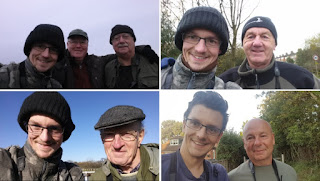
Just a few of you - lots more I need for the photo collection! ;-)
---

Most of the above I wrote earlier this year back in January and now, 9 months on, I've just completed 11 years on patch and it will soon be time to review 2018! All very late I know - time just whizzes by! There has been a significant change in my life this month and it was World Mental Health Day yesterday, so it seems appropriate to publish this reflective post now rather than later. Part of the next bit I was of two minds whether to include or not as I'm not sure how people will take it but feel it has been a significant part of my patch-birding experience, even if not all positive.

Recent and future changes in my patch-birding

A few people have commented on the reduced amount of time I've been spending at Earlswood in the last few years. My usual explanation that I've been busy with uni and work is true, but there have been other reasons.

Firstly, Earlswood gets a lot more coverage by birders these days than it used to, and sometimes I feel less compelled to visit the patch when I know it's been checked already, especially if I have other pressing tasks to do. Having said that though, the increased presence of other birders is great for bird-recording and rare birds being found, and I'm very happy to share the patch with others, and thankful to those who share their finds so that other people can twitch them.

Secondly, in 2015 I met someone at the lakes who for the first time in my life I felt a special connection with. The lovesickness that later followed was the worst kind of emotional pain and depression I've ever experienced and sometimes made me feel too demotivated to go out, I suffered mostly in secret and when I visited the lakes sometimes they seemed to only serve to remind me of her. Some days I just had to give Earlswood a miss and it was easier when I knew other birders had been around already. It took me until about the second half of last year to come to terms with the experience as best as possible, but I got there in the end! I should perhaps add that I don't regret meeting her, and her success in being in her chosen career was inspirational and helped motivate me into returning to uni later that year, to help me achieve similar, although doing a masters during a poor phase in my mental health has been very tough.

I haven't fully finished my masters yet but I think it's played a key part in helping me get into my chosen career. This month I made further career progress by becoming a permanent full-time graduate ecologist! If all goes well it will mean I've achieved one of my life ambitions, and I can start working towards two of my others. Once I finish uni, I have a list of other things I'd like to do, amongst them cracking on with writing my book and seeing some new places around the UK. To be honest, Earlswood alone is no longer enough to make me happy. Unfortunately all this means I'll have less time for patch-birding, but I'm certainly not giving it up and there will be even more scope for other birders to make good finds!

I'm not sure if anyone will have managed to read this far! 😆 As always, many thanks to everyone who has tweeted, emailed, texted or phoned their wildlife sightings to me. All the very best x

Matt

Sunday, 9 September 2018

Earlswood all-dayer - Autumn 2018

A total of 69 bird species were recorded during the Earlswood all-day birdwatch yesterday, our best autumn total to-date (cf. 63 in 2017, 57 in 2016, 56 in 2015). Engine Pool currently having probably the best waterbird habitat on patch in living memory helped - a combination of muddy shores, algae blooms and almost no big fish in the water meaning lots of food available.

Many thanks to John Bishop, Jon Chidwick, Janet James, Mike Jeeves, John Oates, Joe Owen, John Sirrett and Jim Winsper for taking part, especially as it rained for a large portion of the day and there is little shelter. Also many thanks to John Sirrett for collating most of the species recorded during the day, the full list in alphabetical order is as follows:

  1. Black-headed Gull
  2. Blackbird
  3. Blackcap
  4. Blue Tit
  5. Bullfinch
  6. Buzzard
  7. Canada Goose
  8. Carrion Crow
  9. Chaffinch 
  10. Chiffchaff 
  11. Coal Tit
  12. Collared Dove
  13. Common Sandpiper
  14. Coot
  15. Cormorant
  16. Dunlin
  17. Dunnock
  18. Feral Pigeon
  19. Gadwall
  20. Goldcrest
  21. Goldfinch
  22. Great Crested Grebe
  23. Great Spotted Woodpecker
  24. Great Tit
  25. Green Woodpecker
  26. Greenfinch
  27. Grey Heron
  28. Grey Wagtail
  29. Greylag Goose
  30. Herring Gull
  31. Hobby
  32. House Martin
  33. House Sparrow
  34. Jackdaw
  35. Jay
  36. Lesser Black-backed Gull
  37. Linnet
  38. Little Grebe
  39. Little Egret
  40. Long-tailed Tit
  41. Magpie
  42. Mallard
  43. Meadow Pipit
  44. Mistle Thrush
  45. Moorhen
  46. Mute Swan
  47. Nuthatch
  48. Pied Wagtail
  49. Raven
  50. Reed Warbler
  51. Ringed Plover
  52. Robin
  53. Sand Martin
  54. Shoveler
  55. Skylark
  56. Song Thrush
  57. Snipe
  58. Sparrowhawk
  59. Starling
  60. Stock Dove
  61. Swallow
  62. Teal
  63. Treecreeper
  64. Tufted Duck
  65. Willow Warbler
  66. Woodpigeon
  67. Wren
  68. Yellow-legged Gull
  69. Yellow Wagtail

Sunday, 6 May 2018

Earlswood all-dayer - Spring 2018

Team Earlswood recorded a total of 64 bird species on patch yesterday. It was a sunny, hot day with little cloud or wind, and lots of human disturbance in the usual areas, so certainly not an ideal day for picking up migrants. Highlights included our first Whinchat and Yellowhammer of the year, whilst 4 male Reed Bunting was a good count.

Some common species were notable by their absence, but 64 is actually not our worst total: previous spring all-dayers at Earlswood have finished on 56 species in 2015, 77 species in 2016 and 65 species last year. Many thanks to John Bishop, Chris Charles, Jon Chidwick, Janet James, John Oates, Joe Owen, John Sirrett and Jim Winsper for their contributions. Also many thanks to John Sirrett for putting together the following list of species recorded, in alphabetical order:

  1. Black-headed Gull
  2. Blackbird
  3. Blackcap
  4. Blue Tit
  5. Bullfinch
  6. Buzzard
  7. Canada Goose
  8. Carrion Crow
  9. Chaffinch
  10. Chiffchaff
  11. Coal Tit
  12. Collared Dove
  13. Coot
  14. Cormorant
  15. Cuckoo
  16. Dunnock
  17. Feral Pigeon
  18. Goldcrest
  19. Goldfinch
  20. Great Crested Grebe
  21. Great Spotted Woodpecker
  22. Great Tit
  23. Green Woodpecker
  24. Greenfinch
  25. Grey Heron
  26. Greylag Goose
  27. Herring Gull
  28. House Sparrow
  29. Jackdaw
  30. Jay
  31. Kestrel
  32. Lesser Black-backed Gull
  33. Lesser Whitethroat
  34. Linnet
  35. Long-tailed Tit
  36. Magpie
  37. Mallard
  38. Marsh Tit
  39. Mistle Thrush
  40. Moorhen
  41. Mute Swan
  42. Nuthatch
  43. Pheasant
  44. Pied Wagtail
  45. Reed Bunting
  46. Robin
  47. Rook
  48. Sand Martin
  49. Song Thrush
  50. Sparrowhawk
  51. Starling
  52. Stock Dove
  53. Swallow
  54. Tawny Owl
  55. Treecreeper
  56. Tufted Duck
  57. Wheatear
  58. Whinchat
  59. Whitethroat
  60. Willow Warbler
  61. Woodpigeon
  62. Wren
  63. Yellowhammer
  64. Yellow Wagtail